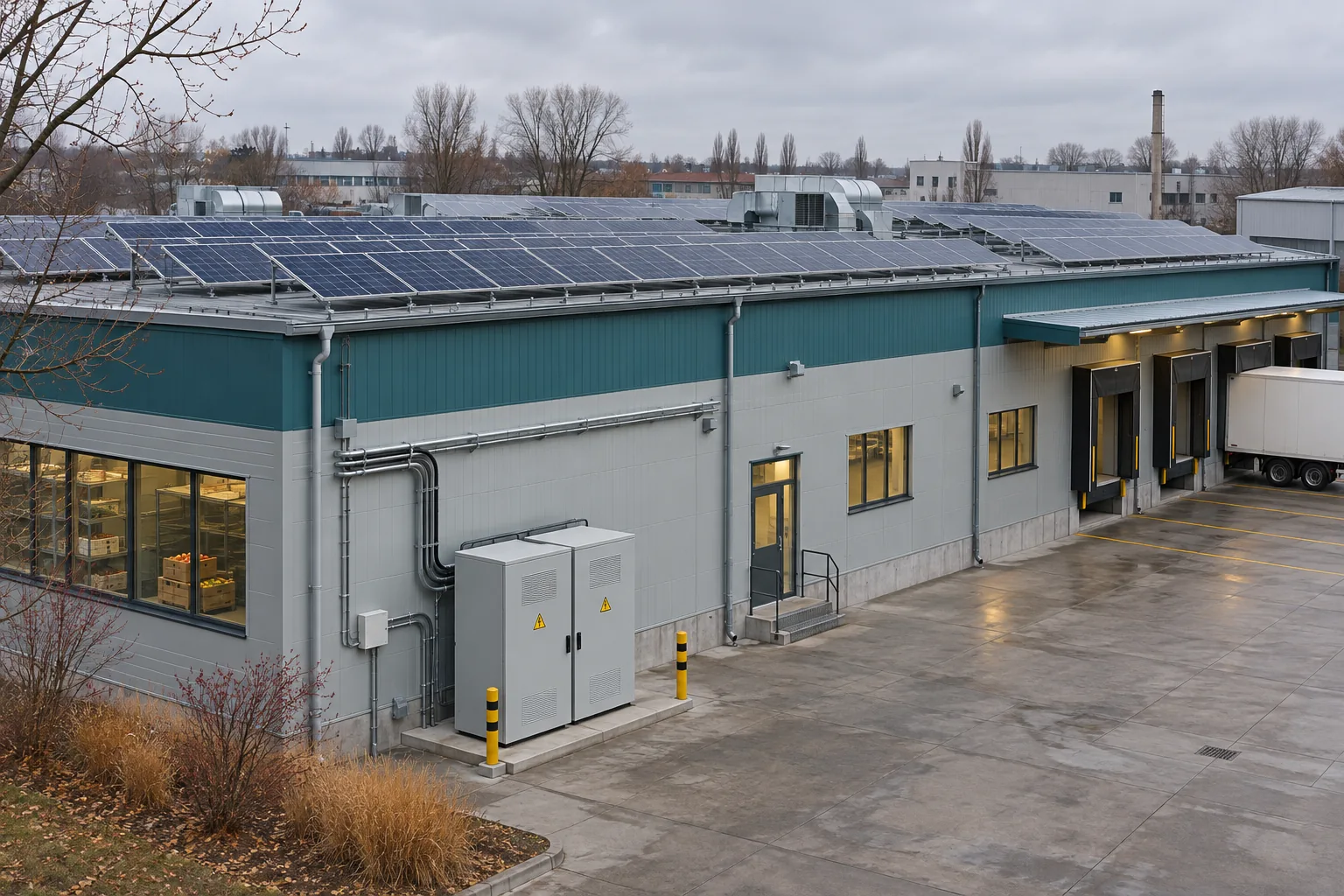
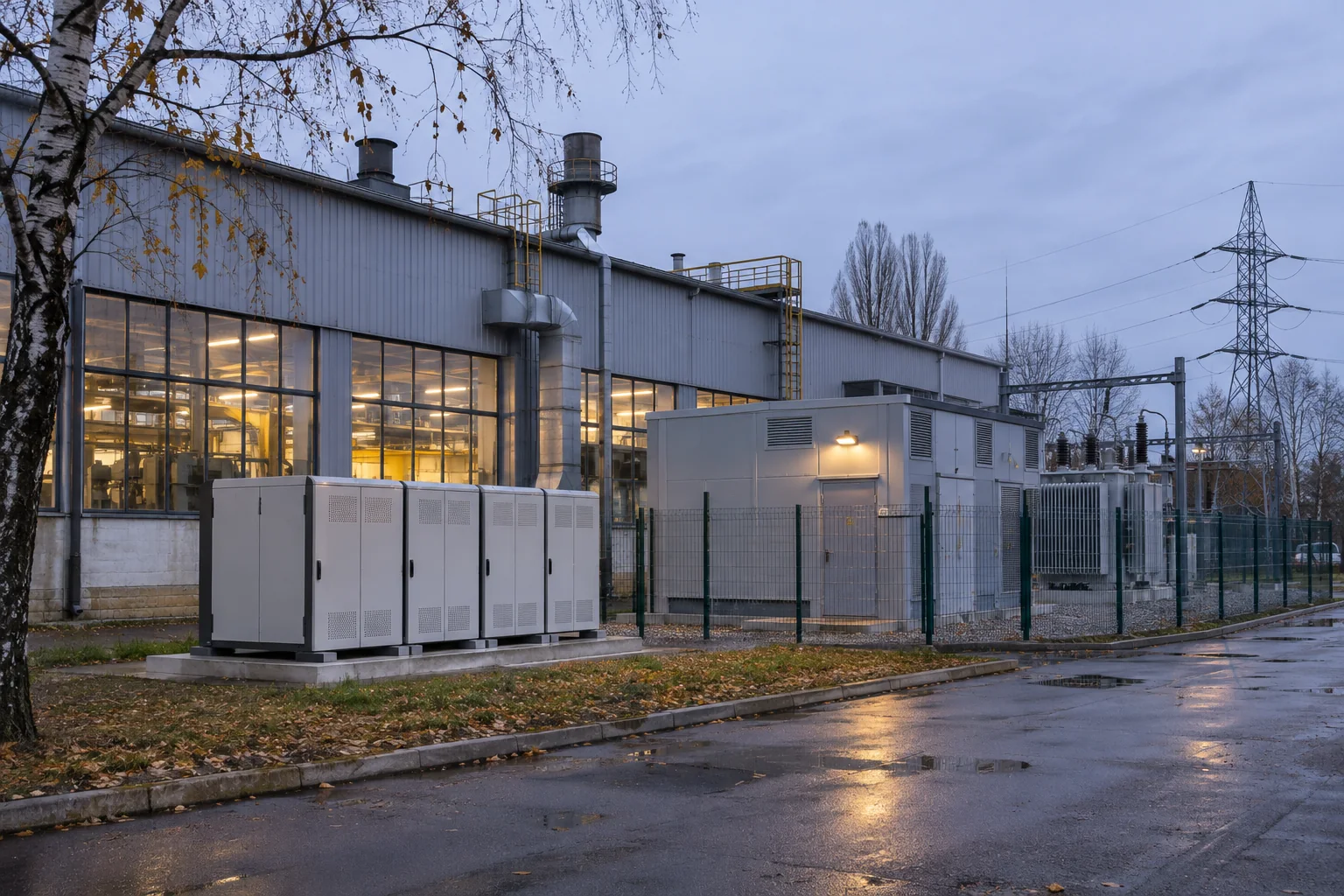
Ukraine’s power system on 20 November: sizing backup power for businesses
Ukraine’s Ministry of Energy reported emergency outages and industrial power restrictions. Here is how a business can assess these two operating scenarios.
What the Ministry of Energy reported
On 20 November 2026, Ukraine’s Ministry of Energy reported that nuclear power plants reduced output following damage to energy infrastructure. Some regions introduced emergency outages, while scheduled outages and industrial power limits applied across much of the country. Check the local distribution operator for the conditions at your site. [1]
Scenario 1: The grid is down
Identify the equipment that must keep running, either continuously or until a safe shutdown. Examples include refrigeration, controls and ventilation. Record how long each process and its supporting equipment need power.
A 40 kW load running for three hours requires 120 kWh delivered to the equipment. Battery nameplate capacity must also account for the usable charge range, losses and reserve. Check inverter power against simultaneous loads and starting currents. The system design must support backup operation without the grid.
Scenario 2: The grid is available with a power limit
If a site needs 90 kW and can draw 60 kW from the grid, the shortfall is 30 kW. At constant load for two hours, that amounts to 60 kWh delivered to the loads. Use interval data in a real assessment because demand varies.
Compare rescheduling processes, reducing simultaneous load and covering the gap with storage. If the same battery also provides backup, set aside a minimum charge for a full outage.
What to prepare for BESS sizing
Gather interval consumption data, outage duration and frequency, a list of critical loads and the site’s connection conditions. Include ratings and actual operating patterns for any existing solar array or generator.
The SBEW calculator can compare indicative backup scenarios and their economics. Before selecting equipment, check whether the battery can recharge between interruptions and how the system transfers to backup.
Common questions
Can one battery serve both scenarios?
Yes, if supported by the electrical design and controls. Set a minimum charge for backup and assess how much energy remains available to cover demand peaks.
Where can I check current limits for my site?
Use the local distribution operator’s official channels and confirm the conditions it has communicated for your specific site.
Sources and context
Prepared by the SBEW editorial team using the sources below. Practical implications for businesses are editorial explanations.