Renewables 2026: why solar and battery storage are planned together
The new IEA outlook highlights storage and flexibility. For a business, the key question is how solar output fits its own consumption profile.
The IEA releases its new outlook
On 6 November 2026, the International Energy Agency published Renewables 2026, its analysis and outlook for renewable energy through 2031. The report covers electricity, transport, heat and biogases. [1]
Two trends in the report
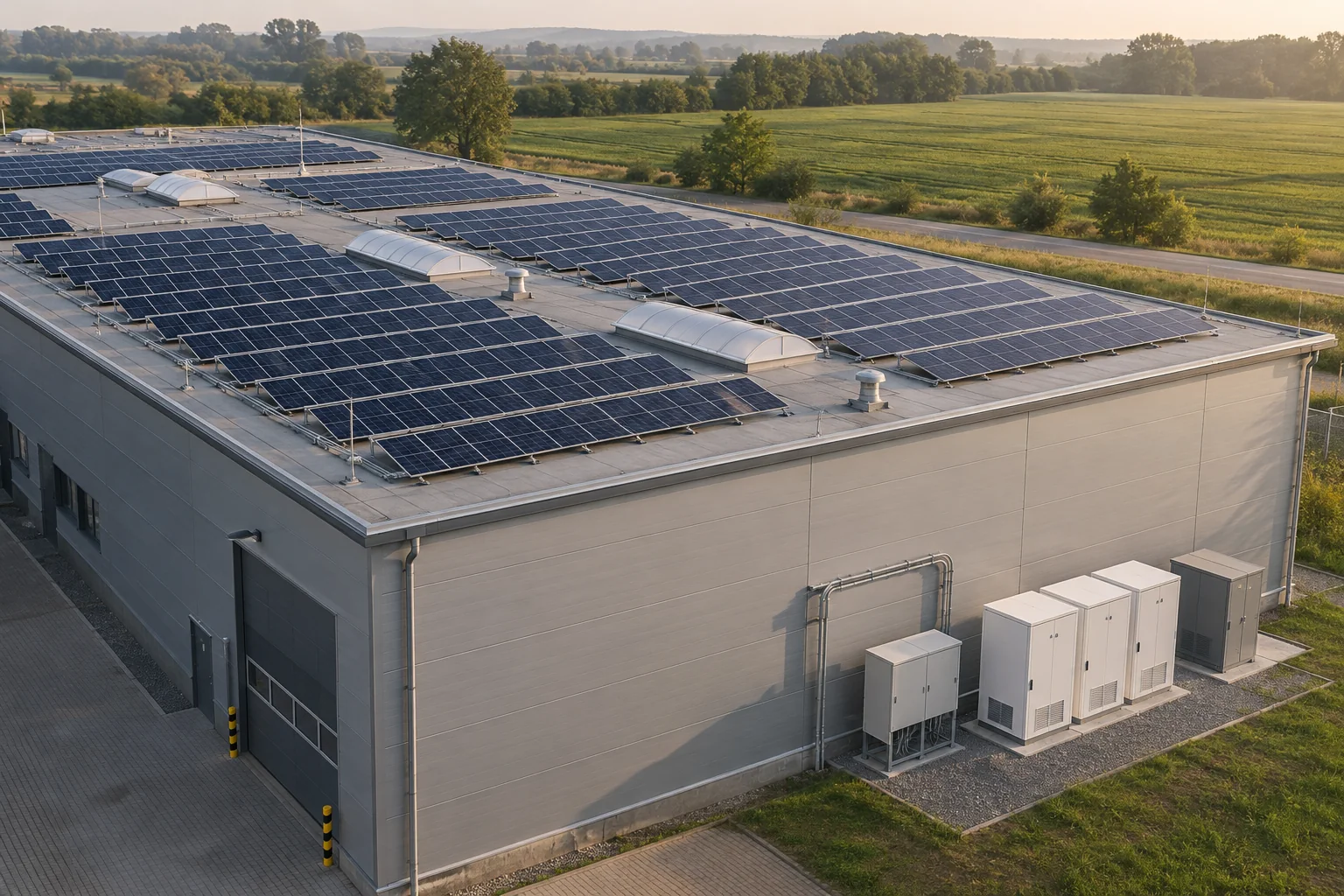
The IEA forecasts an almost sixfold expansion of behind-the-meter energy storage to more than 670 GWh by 2031. It also highlights the role of hybrid projects combining solar or wind generation with batteries in increasing power-system flexibility. [2]
This is a global forecast, not an achieved result or a payback calculation for Ukraine. It does not automatically determine the power, energy capacity or equipment configuration needed at an individual business.
Our implication for businesses: compare time profiles
SBEW’s practical takeaway is to begin a solar-plus-storage assessment by overlaying the facility’s consumption profile and expected solar output. DOE explains that storage allows energy to be used later than it is produced, while conversion and storage involve losses. [3]
For an initial working sheet, divide the day into the measurement intervals available. Mark operating hours, periods of minimum demand and processes that could be moved to another time. Consider weekends and seasonal changes separately. This connects the storage discussion to the facility’s operating pattern instead of simply the available roof area.
Resilience needs its own operating scenario
Define what backup means for the business: continuing production, maintaining critical equipment or shutting down a process in a controlled way. These are different objectives and should not be combined into a single general indicator.
Ask the project proposal to describe normal operation and behaviour during grid loss separately. Clarify how much energy is reserved, which loads would be disconnected first and how normal operation is restored. These are questions for reviewing a design, not claims about the capabilities of every battery.
What to prepare for the first discussion
SBEW suggests gathering a small evidence pack that can be expanded over time. Date each input and distinguish measurements from assumptions.
- A consumption profile and a list of critical processes.
- Details of an existing or planned solar system and its available generation profile.
- Operating scenarios with and without the grid.
- Site constraints and questions for the designer.
The next step
Use the SBEW calculator to compare initial BESS scenarios and see how a change in load affects the result. The equipment-selection questionnaire helps give an engineer the facility’s context. The IEA report provides a view of market direction; selecting a particular system depends on the business’s own data.
Common questions
Does the IEA forecast guarantee savings for a business?
No. It describes global market development. A specific project depends on consumption, generation, technical constraints, costs and its control strategy.
Should every solar installation include a battery?
No. First compare scenarios with and without storage using the facility’s data. The decision should match a defined business requirement.
Sources and context
Prepared by the SBEW editorial team using the sources below. Practical implications for businesses are editorial explanations.