
Ukraine’s day-ahead index rose 69%. How to assess payback for a 5 MW BESS
Ukraine’s day-ahead index rose 69.06% on 1–20 November. Compare 5, 10 and 20 MWh designs and see the economics of one illustrative cycle.
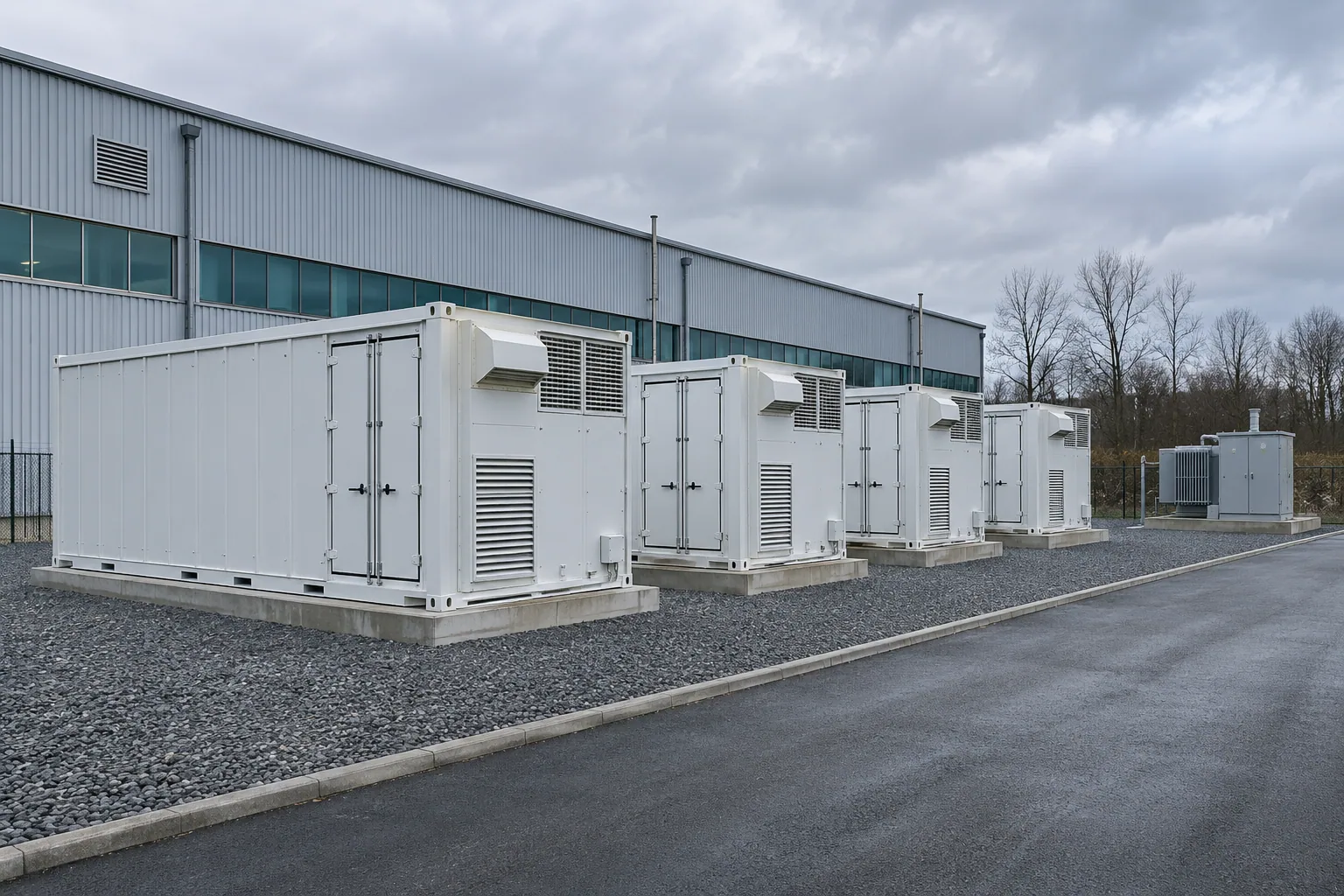
What changed in Ukraine’s day-ahead market
On 23 November 2026, Ukraine’s Market Operator reported a baseload day-ahead index of UAH 8,174.07/MWh excluding VAT for 1–20 November, up 69.06% from 1–20 October. The volume-weighted day-ahead price, a separate measure, was UAH 8,587.29/MWh excluding VAT. [1]
The index shows how wholesale prices moved overall. For a plant, a battery’s value depends on the gap between the cost of charging and the cost of the grid electricity it displaces when discharging. Check both against hourly prices, your supply contract and the plant’s metered load profile. [2]
A 5 MW system: one, two or four hours?
With 5 MW of available AC output, 5 MWh of usable energy delivers one hour at full power. A 10 MWh system delivers two hours and a 20 MWh system four hours. This comparison uses discharge energy available at the same AC boundary. Nameplate battery capacity can be higher than usable capacity, and the number of containers depends on the configuration. [3]
If the valuable discharge window lasts two hours, a 5 MW system can deliver up to 10 MWh during that window. Assess whether additional capacity adds value in other hours, as backup, or under a different load profile.
An example for a 5 MW / 10 MWh installation
Assume the plant can displace 10 MWh of electricity purchased at UAH 10,000/MWh, charging costs UAH 4,000/MWh, and AC round-trip efficiency is 85%. The example prices exclude VAT and illustrate the method. Actual efficiency depends on the equipment and operating conditions. [3]
Delivering 10 MWh requires buying about 11.76 MWh. At 5 MW charging power, this takes about 2 hours and 21 minutes. Charging costs about UAH 47,059 and the displaced grid purchase is worth UAH 100,000. The gross benefit is about UAH 52,941 for this cycle before maintenance, degradation and financing. This assumes sufficient import headroom and time to recharge, plus a 5 MW load for the two discharge hours.
What you need to estimate payback
Start with a year of interval meter readings, electricity prices under your contract, import and export limits, and backup requirements. Model the number of viable cycles and factor in equipment, installation, grid connection, maintenance and loss of usable capacity over time.
The SBEW calculator offers a preliminary comparison for capacity inputs up to 10,000 kWh. A 20 MWh design and a valuation of trading activity call for a separate hourly model.
Common questions
Does a 69% rise in the index imply a similar change in payback?
Payback depends on hourly price spreads, the energy the plant can actually shift, and the total project cost.
How much can a 5 MW BESS deliver in two hours?
Up to 10 MWh if that much usable energy is available at the output and the system can maintain 5 MW throughout the window.
Sources and context
Prepared by the SBEW editorial team using the sources below. Practical implications for businesses are editorial explanations.